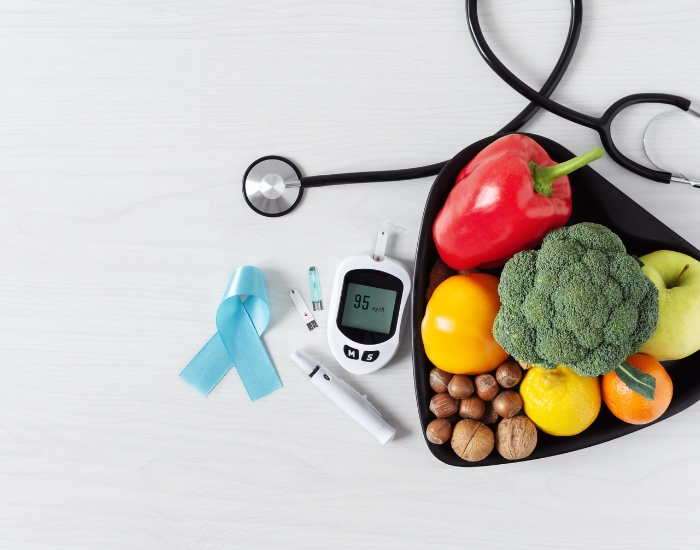
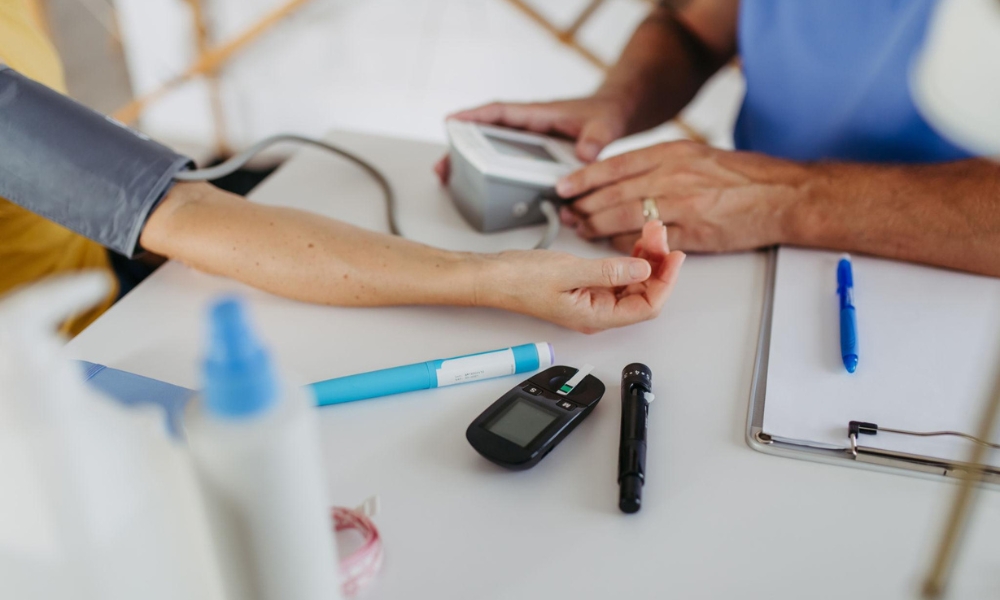
A1C & glucose monitoring
A1C every 3 months while adjusting treatment, then every 6 months when stable.
A1C chart explained →Voss Family Clinic manages type 2 diabetes and prediabetes for adults at 11920 S Highway 6, Suite 1500 in Sugar Land: A1C and blood sugar monitoring, medication management including metformin, GLP-1 and other options, nutrition and activity guidance, and screening for eye, kidney, nerve and heart complications. Monday–Friday, 9:00 AM–5:00 PM.

A1C on schedule
Medicines, habits and complication checks
Tracked with your plan
Metformin, GLP-1 and more
Kidney, eye, foot and heart
Serving Sugar Land & nearby areas: our clinic on S Highway 6 in Sugar Land is close to home for patients from Old Richmond, Bissonnet, Eldridge, Aliana and Missouri City.
Type 2 diabetes means blood sugar runs high because the body does not use insulin well. Over years, high sugar damages blood vessels, kidneys, eyes and nerves, usually without symptoms until late. Good control, measured by the A1C test, prevents most of that damage.
At Voss Family Clinic, a board-certified internal medicine physician and a family nurse practitioner set your A1C target, choose medicines that fit your health and budget, help with food and activity changes you can keep, and check for complications on schedule. Prediabetes gets the same attention, because it is the best time to act.
What we cover
Each piece lowers your risk of complications.
A1C every 3 months while adjusting treatment, then every 6 months when stable.
A1C chart explained →Metformin first for most; GLP-1 and SGLT2 medicines when they fit; insulin when needed, with teaching.
GLP-1 medicines compared →An A1C of 5.7 to 6.4% is the moment to act; weight loss of 5 to 7% cuts progression sharply.
Weight loss & prediabetes →Blood pressure and cholesterol targets are tighter with diabetes; we manage them together.
Blood pressure treatment →Yearly urine protein and kidney tests, foot exams, and referral for a dilated eye exam.
Preventive care →Practical plate-based guidance and 150 minutes of movement a week, adjusted to you.
Blood sugar control tips →A cycle that repeats every few months.
Know your numbers
How the common tests are read.
| Normal | Prediabetes | Diabetes | |
|---|---|---|---|
| A1C | Below 5.7% | 5.7% to 6.4% | 6.5% or higher |
| Fasting glucose | Below 100 mg/dL | 100 to 125 mg/dL | 126 mg/dL or higher |
| What to do | Re-screen every 1 to 3 years with risk factors | Lifestyle program, weight loss, sometimes metformin; recheck in 6 to 12 months | Treatment plan and A1C every 3 to 6 months |
| Learn more | Preventive care | Prediabetes and weight | You are on this page |
Diabetes explained
For most adults with type 2 diabetes, the goal is an A1C under 7%, blood pressure under 130/80 and LDL cholesterol lowered with a statin. Targets are personalized: a little higher for older adults or those with other serious illness, a little lower for younger patients. Reaching them is a mix of medicine and habits, reviewed at every visit.

Metformin lowers sugar production by the liver and is the usual first medicine. GLP-1 medicines (semaglutide, tirzepatide and others) lower sugar, reduce appetite and protect the heart. SGLT2 inhibitors remove sugar through the urine and protect the kidneys and heart. Insulin is used when other medicines are not enough. Your provider explains side effects, cost and monitoring for each.
Once a year: a urine test for protein, blood tests for kidney function, a foot exam for sensation and circulation, and a dilated eye exam through referral. Blood pressure, cholesterol and not smoking matter as much as blood sugar for preventing heart attack and stroke.
Voss Family Clinic accepts most major insurance plans, including Blue Cross Blue Shield, Ambetter, Medicare and Medicare-Medicaid dual plans. What you pay for diabetes visits, labs and supplies (medication coverage varies by plan) depends on your plan’s copay and deductible, and on whether tests are ordered. See insurance accepted or call (281) 617-8671 to verify your coverage before your visit.
Health library

What Happens at an Annual Physical (and How to Prepare)Oct 9, 2026

GLP-1 Side Effects: What’s Normal and When to Call Your DoctorOct 9, 2026
Blood Pressure Chart for Adults — and When High BP Is an EmergencyOct 9, 2026

A1C Chart: Normal, Prediabetes and Diabetes Ranges ExplainedOct 9, 2026

Urgent Care vs ER vs Primary Care: Where Should You Go?Oct 9, 2026You are seen by the same physician and nurse practitioner who care for our regular patients in Sugar Land.

Cares for adults with acute and chronic conditions, including high blood pressure, diabetes, high cholesterol and COPD. Speaks English, Spanish, Hindi, Urdu and Punjabi.
Provides preventive health, chronic disease management and acute care for adults. Speaks English, Urdu, Hindi and Gujarati.
Our providers see patients in English, Spanish, Hindi, Urdu, Punjabi and Gujarati. Dr. Humera Naqvi speaks English, Spanish, Hindi, Urdu and Punjabi; Asma Rehman, FNP-BC, speaks English, Urdu, Hindi and Gujarati. Our appointment, contact, new-patient and insurance pages are also available en español.
“When you walk in everyone is very nice. Lay did my vitals, she is very knowledgeable and has great bedside manner. She listens to what you have to say. It very much feels like family here. I would recommend anyone looking for a primary doctor to come here.”
Patient review on Google · Read more reviewsFAQ
Quick answers about diabetes care at our Sugar Land clinic.
Our front desk can answer questions about visits and confirm your insurance before you come in.
Every 3 months while treatment is being adjusted, then every 6 months once you are stable at goal.
When appropriate, yes. GLP-1 medicines such as semaglutide (Ozempic) and tirzepatide (Mounjaro) lower blood sugar, help with weight and protect the heart. Your provider reviews whether they fit your health and coverage.
Often, yes. Losing 5 to 7% of body weight, regular activity and better food choices substantially reduce progression to diabetes. Our medical weight loss program can help.
Many people with type 2 diabetes never need insulin. It is used when other medicines are not enough or when sugar is very high; we teach you how to use it if it is needed.
Your glucose meter or readings, your medicines, and a note of any low or very high readings and when they happened.
We provide primary care for adults with type 1 diabetes alongside an endocrinologist, who manages insulin regimens.
Voss Family Clinic accepts most major insurance plans, including Blue Cross Blue Shield, Ambetter, Medicare and Medicare-Medicaid dual plans. Coverage depends on your specific plan and network, so call (281) 617-8671 with your card ready and the front desk will confirm your benefits before your visit.
Yes. Voss Family Clinic is accepting new adult patients for primary care. Your first visit can be a walk-in, a scheduled appointment or a sick visit, and the same team continues your care afterward.
Visit us
Voss Family Clinic
11920 S Highway 6, Suite 1500
Sugar Land, TX 77498
Rated 4.4 out of 5 from 257 reviews on Google (October 2026). View on Google Maps
We are on Highway 6 in Sugar Land, 0.4 mile south of West Airport Boulevard and 2 miles north of US-90A. From the south, take Highway 6 north: about 5 minutes from Constellation Field or the Sugar Land Airport area, and 8–9 minutes from First Colony, Sugar Land Town Square or Telfair.
From Aliana, take West Airport Boulevard east and turn right on Highway 6 (about 8 minutes). From Mission Bend, take Beechnut Street east and turn right on Highway 6 (about 9 minutes). Times are without traffic; use Get Directions for live routes.
Voss Family Clinic provides diabetes care Monday–Friday, 9:00 AM–5:00 PM, at 11920 S Highway 6, Suite 1500 in Sugar Land. Call or request a visit.
Voss Family Clinic · Sugar Land, TX
Walk-ins welcome Monday to Friday. Most major insurance accepted, including BCBS, Ambetter and Medicare.
Leave your details and our front office will call you back.
This form is not monitored around the clock. For a medical emergency, call 911. · (281) 617-8671 · Mon–Fri 9–5