
Heart Disease Follow-Up & Monitoring in Sugar Land, TX
Voss Family Clinic provides ongoing primary care for adults with coronary artery disease, prior heart attack or stent, heart failure, atrial fibrillation and high cardiovascular risk at 11920 S Highway 6, Suite 1500 in Sugar Land: blood pressure and cholesterol control, medication management, EKG when needed, and close coordination with your cardiologist. Monday–Friday, 9:00 AM–5:00 PM.
Accepting new patients · Most major insurance, including Blue Cross Blue Shield, Ambetter and Medicare

The role of primary care after a heart diagnosis
A heart diagnosis is not a single event. After a heart attack, stent, bypass or a new diagnosis such as atrial fibrillation or heart failure, the work that protects you over the years happens in regular visits: keeping blood pressure, cholesterol and blood sugar at target, taking the right medicines at the right doses, noticing early changes and staying active.
At Voss Family Clinic, a board-certified internal medicine physician leads that follow-up, with your cardiologist handling procedures and specialist decisions. We share records, reconcile medicines after every hospital stay and make sure nothing falls between visits.
- Blood pressure, cholesterol, diabetes and weight managed to cardiac targets
- Medication management: statins, blood thinners, blood pressure and heart failure medicines
- EKG and basic labs in the office; referral for echocardiogram and stress testing
- Medication reconciliation after hospital stays and coordination with cardiology
Heart conditions we follow
Day-to-day care for stable heart disease, with cardiology for procedures and complex decisions.
Coronary artery disease
After a heart attack, stent or bypass: antiplatelet therapy, statins, blood pressure and symptom review.
Signs of blocked arteries →Heart failure
Weight and fluid monitoring, medicines that improve survival, and early action when symptoms change.
Atrial fibrillation
Rate control, anticoagulation monitoring and stroke prevention.
Heart palpitations →High cholesterol
LDL targets after a cardiac event are strict; statins and add-on therapy when needed.
High cholesterol →High blood pressure
Home monitoring and medicines adjusted to protect the heart and kidneys.
Blood pressure treatment →Prevention
Cardiac rehab referral, activity, nutrition, smoking cessation and vaccines.
Preventive care →How heart follow-up works
A steady routine between cardiology visits.
Baseline
Your cardiac history, procedures, current medicines and targets, with labs and an EKG if needed.
Targets
Blood pressure, LDL cholesterol, blood sugar and weight goals set for your condition.
Regular visits
Every 3 to 6 months: symptoms, vital signs, medicines and labs, with adjustments.
Coordinate
Records shared with your cardiologist, medicines reconciled after any hospital stay, and referrals when something changes.
Primary care, cardiology or the ER?
Knowing where to go saves time and protects your heart.
| Primary care at our clinic | Cardiologist | Emergency room | |
|---|---|---|---|
| Best for | Routine follow-up, risk factors, refills, new mild symptoms, vaccines | Procedures, echocardiograms and stress tests, device checks, complex medicine decisions | Chest pain, severe shortness of breath, fainting, stroke signs |
| How often | Every 3 to 6 months | As your cardiologist schedules | Immediately when needed |
| Learn more | You are on this page | We refer and coordinate | Chest pain: what to do |
The numbers that protect your heart
After a cardiac event, targets are stricter than for the general population: LDL cholesterol usually under 70 mg/dL (sometimes under 55), blood pressure under 130/80, and an A1C under 7% if you have diabetes. Reaching them requires medicines taken consistently and habits that support them. Your follow-up visits track each number and adjust treatment.
Medicines most heart patients take
- A statin, and sometimes ezetimibe or other add-ons, to lower LDL
- Aspirin or another antiplatelet after a stent or heart attack, for the period your cardiologist sets
- Blood pressure medicines such as ACE inhibitors, ARBs or beta-blockers that also protect the heart
- Anticoagulants for atrial fibrillation, with monitoring
- Heart failure medicines that improve survival, adjusted carefully
Habits that matter as much
- Cardiac rehabilitation after a heart attack, stent or bypass
- Not smoking, with help to quit
- 150 minutes of moderate activity a week, cleared by your providers
- A Mediterranean-style diet with less sodium
- Flu, COVID-19 and pneumococcal vaccines
Insurance and cost
Voss Family Clinic accepts most major insurance plans, including Blue Cross Blue Shield, Ambetter, Medicare and Medicare-Medicaid dual plans. What you pay for heart follow-up visits, labs and EKGs depends on your plan’s copay and deductible, and on whether tests are ordered. See insurance accepted or call (281) 617-8671 to verify your coverage before your visit.
Explore related care at our clinic
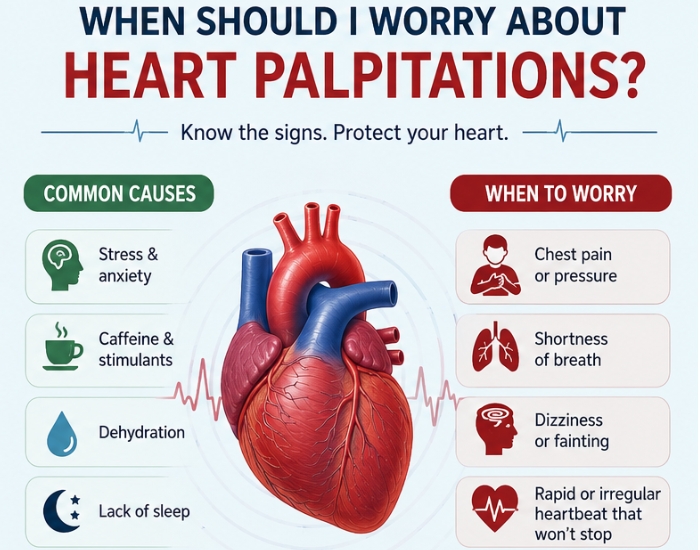
- Heart palpitations: when to worry
- Signs of blocked arteries
- High blood pressure treatment
- High cholesterol symptoms
- Chronic disease management
- Walk-in clinic
- Annual physical exams
- Lab testing
Sources
- Heart Diseases, MedlinePlus
- Heart Attack, MedlinePlus
- Cholesterol, MedlinePlus
- Electrocardiogram, MedlinePlus
Last updated October 10, 2026 by Voss Family Clinic.
Care from our primary care providers
You are seen by the same physician and nurse practitioner who care for our regular patients in Sugar Land.

Dr. Humera Naqvi
Cares for adults with acute and chronic conditions, including high blood pressure, diabetes, high cholesterol and COPD. Speaks English, Spanish, Hindi, Urdu and Punjabi.
Asma Rehman, MSN, APRN, FNP-BC
Provides preventive health, chronic disease management and acute care for adults. Speaks English, Urdu, Hindi and Gujarati.
“An excellent experience! Everyone was so nice and pleasant. Lisa is personable and took good care of me as well, and the doctor was thoughtful, trustworthy, kind, efficient. My needs were heard and addressed! Will definitely be returning.”
Patient review on Google · Read more reviewsHeart symptoms that need 911
Do not drive yourself. Call 911 for:
- Chest pain, pressure or tightness lasting more than a few minutes, or that comes and goes
- Pain spreading to the arm, jaw, neck or back
- Shortness of breath at rest or lying flat
- Fainting or near-fainting
- A very fast or irregular heartbeat with dizziness or chest pain
- Face drooping, arm weakness or slurred speech
Emergency warning signs based on MedlinePlus: Heart Attack and the American Stroke Association.
Heart follow-up questions we hear most
Quick answers about heart care at our Sugar Land clinic.
Still have questions?
Our front desk can answer questions about visits and confirm your insurance before you come in.
Call (281) 617-8671Do I still need a cardiologist?
Usually yes, for procedures, imaging and complex decisions. Primary care handles the routine follow-up and risk factor control in between, and we coordinate with your cardiologist.
Can you do an EKG?
Yes, when symptoms call for it. Echocardiograms and stress tests are arranged through referral.
How often should I be seen?
Every 3 to 6 months when stable, sooner after a hospital stay or medication change.
What should my cholesterol be?
After a cardiac event, LDL is usually targeted under 70 mg/dL, sometimes lower. Your provider sets your target and adjusts treatment to reach it.
Can you manage my blood thinner?
Yes. We monitor anticoagulation, review interactions with new medicines and coordinate with your cardiologist.
Is exercise safe after a heart attack?
Yes, with guidance. Cardiac rehabilitation is the safest way to rebuild fitness; we refer you and help you continue afterward.
What insurance do you accept?
Voss Family Clinic accepts most major insurance plans, including Blue Cross Blue Shield, Ambetter, Medicare and Medicare-Medicaid dual plans. Coverage depends on your specific plan and network, so call (281) 617-8671 with your card ready and the front desk will confirm your benefits before your visit.
Are you accepting new patients?
Yes. Voss Family Clinic is accepting new adult patients for primary care. Your first visit can be a walk-in, a scheduled appointment or a sick visit, and the same team continues your care afterward.
Heart follow-up at our Sugar Land clinic
Voss Family Clinic
11920 S Highway 6, Suite 1500
Sugar Land, TX 77498
- Mon–Fri
- 9:00 AM – 5:00 PM (walk-ins welcome)
- Sat–Sun
- Closed
- Phone
- (281) 617-8671
Rated 4.4 out of 5 from 257 reviews on Google (October 2026). View on Google Maps
Request a heart follow-up visit
Send your details and our staff will call you during office hours to confirm a date and time.
Please do not include detailed medical information. A request is not a confirmed appointment. For emergencies, call 911.
Keep your heart care on track.
Voss Family Clinic provides heart disease follow-up Monday–Friday, 9:00 AM–5:00 PM, at 11920 S Highway 6, Suite 1500 in Sugar Land. Call or request a visit.